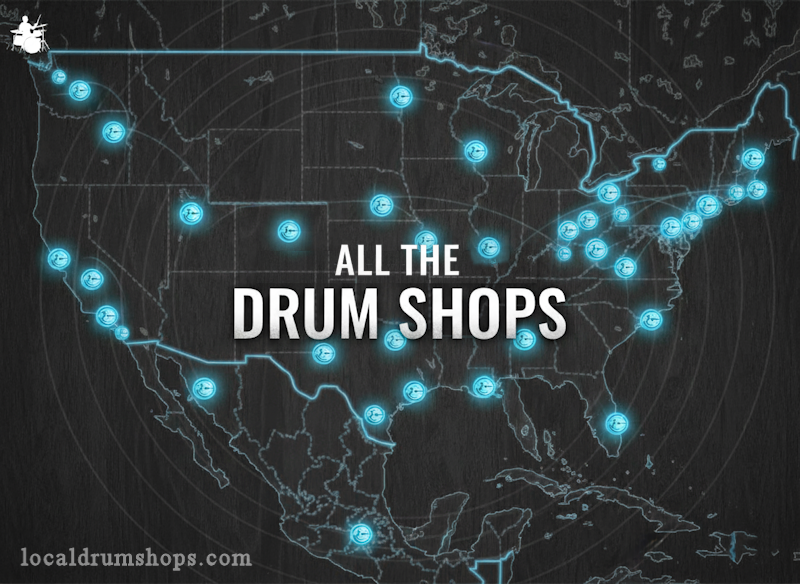
Local Drum Shops has all 115 musical instrument retailers in the United States, Canada, and Mexico that specialize in drums and percussion instruments.
- 98 of the shops are open to the public
- 14 are open by appointment only
- 3 sell only online but allow on-site pick-up
From the legendary stores the pros have trusted for years to new shops with new energy and ideas, the perfect local drum shop is closer than you think.
Find your local drum shop
Most Read
- Fort Worth Drum Emporium
- North Richland Hills, Texas
- Keur Djembe African Drum Shop
- Brooklyn, New York
- Portland Percussion
- Gray, Maine
- California Drums
- Monrovia, California
- Dave's Drum Depot
- La Crosse, Wisconsin
- Revival Drum Shop
- Portland, Oregon
- Good Hands Drum Shop
- New York City, New York
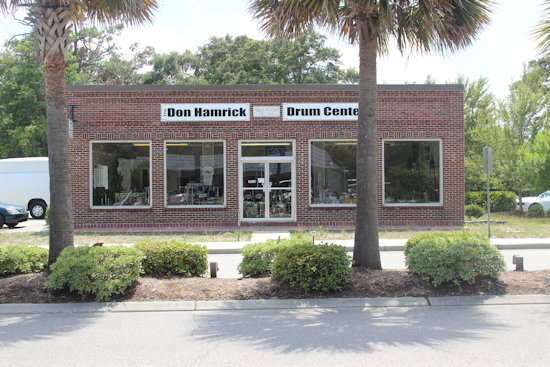
Drum Shop of the Day
North Myrtle Beach, South Carolina 29582
Phone: 843-273-0578
Email: dhdrumcenter@sc.twcbc.com
Web: donhamrick.com ↗
Web Presence Score: 20
Showroom: Public
Capacity Score: 60
Founded: 2013
Owner: Don Hamrick
Site Updates
- March 21, 2026
- Added The California Drum Shop of Bethlehem, Pennsylvania.
- March 20, 2026
- Removed Sam Adato's Drum Shop of Eugene, Oregon.
- March 11, 2026
- Added store ratings. Users of LocalDrumShops can now give shops a rating from one to five stars.
- February 1, 2026
- Removed Rufus Drum Shop of Vancouver, British Columbia.
- January 17, 2026
- Added Rocco Z Music of McHenry, Illinois.
Competitive Landscape
Scope
The retailers listed on LocalDrumShops.com are independent musical instrument retailers specializing in drums and other percussion instruments. They have physical locations that customers can visit, keep merchandise in stock for immediate sale, and serve as local resources for musicians in ways that are both personal and tailored to their communities' needs.
Locations
Our data shows that drum shops are most often located in metropolitan or micropolitan areas rather than in rural markets. Locations cluster around population centers of varying size, from large metro regions to mid-sized regional hubs, suggesting that sustainable, drum-only retail most often depends on access to a broader labor and customer market. The largest concentrations of drum shops in North America are in the heavily-populated northeastern US and southeastern Canada.
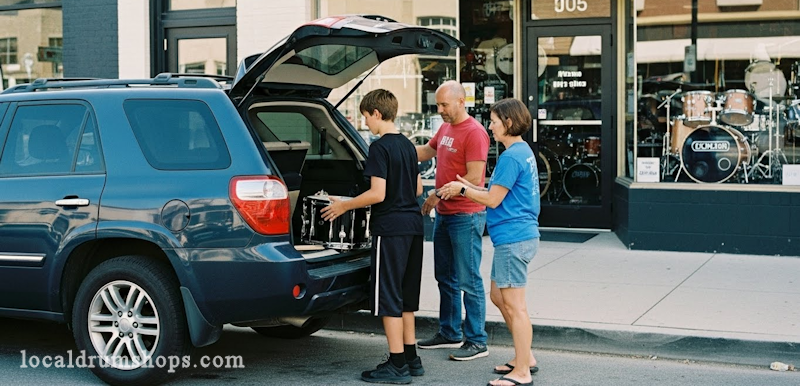
Most shops operate a conventional storefront and are open during regular, published hours, while a smaller but notable minority use appointment-only or online-first to reduce overhead. This indicates that while the traditional storefront remains dominant, alternative showroom strategies are a common adaptation to local market size and cost pressures. Store locations are most often leased rather than purchased and are usually in older, lower-cost commercial districts. Some store owners are creative in their location choice by subleasing second-floor space, a garage, or partitioning off a small area of a larger store. A few well-established drum shops are located in conventional retail space such as strip shopping malls or stand-alone retail buildings. Store sizes range from a few hundred to 20,000 square feet.
Product Mix and Specialization
The larger drum shops tend to be traditional insrument retailers offering all major brands of drums, cymbals, and supplies as well as lessons and repair services. Newer or smaller shops may specialize in used or vintage gear but often will also offer new supplies such as heads and sticks. A few stores rely on relationships with local school systems.
Other specializations observed in the data include orchestral percussion, ethnic percussion, custom-built drums, and unique, locally-sourced percussion intruments.
Product mix is typically a function of demand and margin. High-end instruments have lower demand and lower margins but drive foot traffic; student instruments have slightly higher margins and turn faster but are seasonal; supplies and accessories have highest demand, margin, and repeat business but require more frequent turnover to be successful.
Digital Presence
Web Presence Scores for the shops on our list range from 15 to 95 with a median score of 80 on a 100-point scale. The Web Presence Score is the sum of four weighted factors: Transactional Presence & Quality (35%), Social Media & Video Footprint (35%), Core Landing Page Usability (15%), and Community & Service Integration (15%).
Most drum shops maintain their own website, but the site is often modest in scope. Many sites are little more than online brochures with only a handful of pages rather than full e-commerce platforms, though a minority function as robust online catalogs. Where websites are present, the most frequently mentioned offerings include core drum and percussion products (kits, cymbals, hardware), a selective but recognizable brand mix, and a small set of value-add services such as lessons, repairs, trades, or custom work.
YouTube channels exist for many shops but are usually low-volume, with limited subscribers and sporadic uploads, suggesting that video is supplementary rather than central to the business model. When a shop does post a high volume of videos, they are most often product demos rather than original content.
The most common social media outlets are Facebook and Instagram, with a few stores relying on these for their entire web presence. There is a wide variety in how stores use these platforms, however, with some using them primarily to announce occasional sales or events, some using them to build an interactive community of drummers, and others using them as a no-cost e-commerce platform by listing specific inventory items for sale with a comment to contact the store to purchase. TikTok and X are less commonly used by drum shops, which is consistent with most stores not having staff to create original content.
Common site vendors such as Shopify, WordPress, and MusicShop360 appear frequently, indicating reliance on turnkey platforms rather than custom website development.
Third-party marketplaces play an outsized role: a significant share of shops list inventory on Reverb and/or eBay, even when they lack a strong first-party site, making these outlets a standard extension of retail operations.
Operations
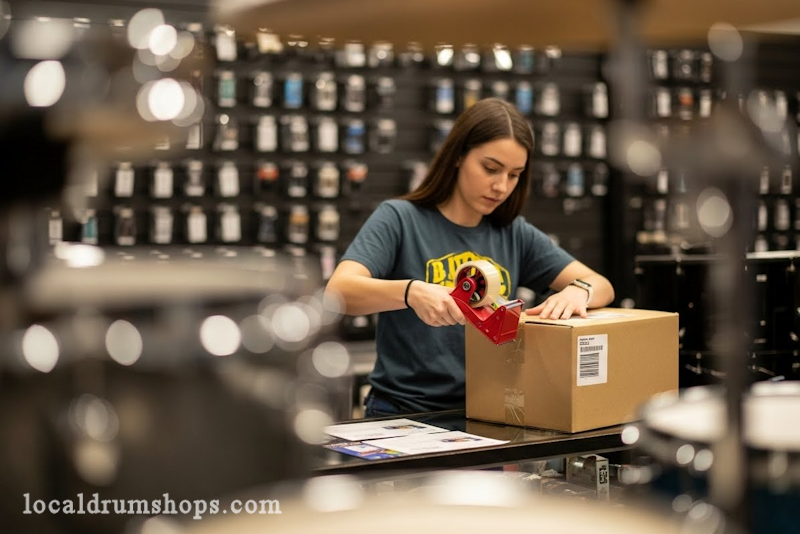
The typical drum shop is well-established, with founding dates often in the 1990s or early 2000s, pointing to long survival horizons among successful specialty retailers. New stores continue to open at a slightly greater rate than existing ones close, although the new stores tend to be smaller and more niche than the established stores they replace. When drum stores do close, it is often because the owner has retired, is in poor health, or has simply chosen to do something else, not necessarily because the store was unprofitable.
Store names are often tied to the owner’s name or the local region, reinforcing the independent, personality-driven nature of the sector. Local customers will often develop a sense of shared ownership of the store, leading to a sense of shared responsibility for its success. There are no chain stores specializing in drums, and no independent drum store has more than a single location. The store owner is usually on-site.
Overall, the data indicates the typical drum shop remains a mature, locally-rooted specialty retailer that blends a physical showroom with local services and a selective online reach rather than operating as a digital-first brand.
Use our Statistics page to generate aggregated metrics across all drum shops, or select any store from the master list to drill down into specific store details.